

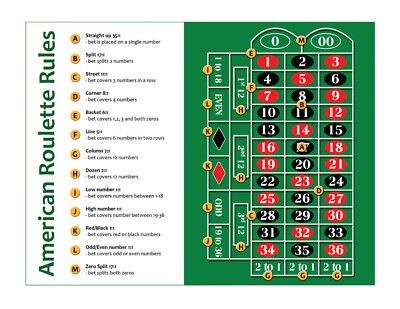
Roulette remains one of the most iconic and enduring games in the casino world, and its digital counterparts have brought the spinning wheel to millions of screens worldwide. For technology enthusiasts and players alike, understanding the underlying mechanics, probabilistic models, and strategic frameworks of roulette is essential. This article breaks down the rules, bet types, house edge mathematics, and the most discussed strategies, providing a clear, professional reference for anyone looking to master the game.
The Fundamentals of Roulette
At its core, roulette is a game of chance played on a wheel with numbered pockets and a corresponding betting layout. A small ball is spun in the opposite direction of the wheel, and players wager on where the ball will land. The two dominant variants are European Roulette and American Roulette. European wheels feature 37 pockets (numbers 1 through 36 plus a single zero), while American wheels include 38 pockets (numbers 1 through 36 plus both a single zero and a double zero). This seemingly minor difference has a profound impact on the house edge and, consequently, on expected returns.
Core Roulette Rules
Before placing any bets, players should understand the flow of a standard round. The rules are straightforward, but the variety of wagers can be extensive.
In most jurisdictions and online platforms, the en prison or la partage rule applies to even-money bets when zero appears, effectively reducing the house edge on those specific wagers in European Roulette.
Understanding Bet Types
Roulette offers a diverse array of betting options, generally categorized as inside bets and outside bets. The distinction is important because it affects both payout odds and the probability of winning.
Inside Bets
- Straight Up: A bet on a single number. Payout is 35 to 1.
- Split: A bet on two adjacent numbers. Payout is 17 to 1.
- Street: A bet on three numbers in a row. Payout is 11 to 1.
- Corner: A bet on four numbers forming a square. Payout is 8 to 1.
- Six Line: A bet on two adjacent rows of three numbers. Payout is 5 to 1.
Outside Bets
- Column: A bet on one of three columns of twelve numbers. Payout is 2 to 1.
- Dozen: A bet on the first, second, or third group of twelve numbers. Payout is 2 to 1.
- Red or Black: A bet on the color of the winning number. Payout is 1 to 1.
- Odd or Even: A bet on whether the number will be odd or even. Payout is 1 to 1.
- Low or High: A bet on whether the number falls between 1–18 or 19–36. Payout is 1 to 1.
The Mathematics of the House Edge
Understanding the house edge is critical for any serious player. The edge is derived directly from the wheel composition and the payout structure.
| European Roulette | 37 | 2.70% | 1.35% |
| American Roulette | 38 | 5.26% | 5.26% |
As the table illustrates, European Roulette is statistically more favorable to the player. The addition of the double zero in American Roulette nearly doubles the house edge, making it a less attractive option for those who prioritize expected value. This is a fundamental consideration for anyone developing or analyzing roulette software, as the payout algorithms must be precisely calibrated to these probabilities.
Strategies and Systems
While roulette is fundamentally a game of independent trials, numerous betting systems have been developed in an attempt to manage bankrolls and influence outcomes. It is important to note that no strategy can overcome the mathematical house edge in the long run. However, these systems can structure play and manage risk.
Martingale System
The Martingale is perhaps the most famous progressive betting system. The premise is simple: double your bet after every loss until you win, at which point you revert to your initial stake. Theoretically, this guarantees a profit equal to the original bet. In practice, however, table limits and finite bankrolls make this strategy highly risky. A prolonged losing streak can quickly deplete funds or hit the maximum bet ceiling.
D’Alembert System
The D’Alembert is a more conservative progressive system. Instead of doubling, players increase their bet by one unit after a loss and decrease it by one unit after a win. This approach assumes that outcomes will eventually balance out, but like all systems, it does not alter the underlying probabilities.
Fibonacci System
Based on the famous mathematical sequence, the Fibonacci system involves betting the sum of the two previous bets after a loss. While it is less aggressive than Martingale, it still requires a substantial bankroll to withstand losing streaks and does not provide a mathematical advantage.
Flat Betting
Flat betting involves wagering the same amount on every spin, regardless of previous outcomes. This method is favored by disciplined players who wish to extend their playtime and avoid the catastrophic losses associated with progressive systems. It is simple, transparent, and easy to implement in both land-based and online environments.
Technical Considerations for Digital Roulette
In the digital realm, roulette is powered by Random Number Generators (RNGs) that ensure each spin is independent and unbiased. For developers and auditors, verifying the fairness of these RNGs is paramount. The payout tables are hard-coded to reflect the odds discussed above, and the house edge is mathematically embedded into the game’s architecture. Players should always ensure they are playing on licensed platforms that undergo regular third-party testing to confirm the integrity of their RNGs and payout percentages.
Conclusion
Roulette is a game of elegant simplicity and complex mathematics. By understanding the rules, the nuanced differences between European and American variants, the precise house edge, and the limitations of betting systems, players and technologists alike can approach the game with a clear, informed perspective. Whether you are building a roulette application or simply enjoying a session at the table, a firm grasp of these principles is the foundation of a professional and responsible experience.