

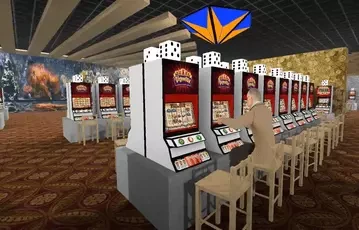
The convergence of virtual reality and online gambling represents one of the most significant technological shifts in the digital entertainment sector. As VR hardware becomes more accessible and network infrastructure matures, virtual reality casinos are transitioning from speculative concept to tangible commercial frontier. For operators, developers, and players alike, the question is no longer whether VR casinos will arrive at scale, but how quickly they will redefine the standards of online gambling.
This analysis examines the technological foundations, user experience paradigms, regulatory considerations, and commercial trajectory of VR casinos over the coming decade.
The Evolution from 2D Platforms to Immersive Environments
Traditional online casinos rely on flat interfaces, grid-based lobby structures, and 2D game rendering. While functional and profitable, these platforms lack the spatial presence that defines the physical casino experience. Virtual reality bridges that gap by reconstructing the sensory and social dimensions of a brick-and-mortar venue within a fully digital space.
Early experiments in VR gambling were hindered by bulky headsets, limited processing power, and prohibitive costs. Modern standalone devices have eliminated many of these barriers. Contemporary headsets deliver high refresh rates, inside-out tracking, and hand-tracking capabilities at consumer price points. This hardware maturity is the catalyst driving renewed investment in VR casino development.
Key Technological Enablers
- Standalone headsets with 4K-per-eye resolution and wireless operation
- Cloud rendering that offloads GPU-intensive workloads to remote servers
- 5G and low-latency broadband enabling real-time multiplayer synchronization
- Hand and eye tracking for natural, controller-free interaction
- Spatial audio that replicates the acoustic atmosphere of a live casino floor
- Blockchain-based payment rails for transparent and rapid transactions
Collectively, these technologies allow operators to deliver gameplay that feels continuous, embodied, and socially alive rather than transactional and isolated.
Redefining the Player Experience
The defining advantage of virtual reality casinos is presence. Players do not merely view a roulette wheel; they stand before it. They do not click a button to join a blackjack table; they sit across from a dealer and fellow participants. This spatial immersion fundamentally alters engagement metrics, session duration, and emotional investment.
Social Interaction and Community
One of the most compelling dimensions of VR casinos is the restoration of social gambling. Avatar-based representation allows players to converse, gesture, and celebrate wins together in shared virtual rooms. Live dealers, rendered as full-body avatars, can respond to nonverbal cues. Tournaments and private tables become events rather than menu options.
Social presence also strengthens retention. Players who form relationships within a virtual casino ecosystem are significantly more likely to return, mirroring the loyalty dynamics observed in physical venues.
Game Design Beyond Traditional Constraints
Virtual reality liberates game designers from the limitations of flat screens. Consider the following possibilities:
These innovations expand the definition of casino gaming itself, attracting demographics that traditional platforms have struggled to engage.
Operational and Regulatory Landscape
Despite technological momentum, VR casinos face a complex compliance environment. Gambling jurisdictions regulate identity verification, geolocation, responsible gaming tools, and anti-money laundering procedures. Integrating these requirements into immersive environments demands careful engineering.
| Identity verification | Confirming player age and jurisdiction within a headset | Biometric authentication and device-level KYC |
| Geolocation | Preventing access from restricted regions | GPS, IP triangulation, and network attestation |
| Responsible gaming | Monitoring behavior in immersive sessions | AI-driven session analytics and mandatory cool-down prompts |
| Payment processing | Secure transactions inside virtual environments | Tokenized wallets and regulated stablecoin rails |
| Data privacy | Protecting biometric and behavioral data | On-device processing and zero-knowledge architectures |
Regulators in mature markets are beginning to draft frameworks that acknowledge immersive platforms. Operators who invest early in compliance infrastructure will likely secure first-mover advantages as licensing regimes formalize.
Commercial Outlook and Industry Adoption
Market analysts project sustained growth in VR hardware penetration and immersive content spending throughout the next decade. The gambling sector typically follows entertainment and gaming adoption curves by several years, suggesting that mainstream VR casinos will emerge as the technology becomes ubiquitous.
Several strategic pathways are already visible:
- Integration — established online casinos adding VR lobbies to complement existing 2D offerings
- Native platforms — purpose-built VR casinos designed from the ground up for immersion
- Land-based extensions — physical casinos deploying VR lounges to extend their brand digitally
- Metaverse partnerships — virtual world operators embedding regulated gambling zones
Each pathway carries distinct regulatory and capital requirements, but all point toward a diversified ecosystem rather than a single dominant model.
Barriers to Mainstream Adoption
Optimism must be tempered by practical realities. Headset ownership remains concentrated among early adopters. Motion sickness affects a minority of users. Content libraries are still limited, and development costs for high-fidelity VR environments exceed those of conventional casino games. Interoperability between platforms and payment systems also remains fragmented.
These barriers are eroding, but not overnight. The transition to mainstream VR gambling will likely unfold over five to ten years rather than a single product cycle.
The Strategic Imperative for Operators
Virtual reality casinos represent more than a novelty feature. They signal a broader shift toward experiential, presence-driven digital entertainment. Operators who treat VR as a long-term strategic pillar — investing in content, compliance, and infrastructure — will be positioned to capture a generation of players raised on immersive media.
The future of virtual reality casinos will be defined by those who understand that immersion is not merely visual. It is social, emotional, and spatial. The platforms that master all three dimensions will set the standard for the next era of online gambling.